
Horizontal Lifeline Systems in Ontario: Design, Requirements, and Compliance Guide
Horizontal Lifeline Systems in Ontario: Design, Requirements, and Compliance Guide
Horizontal lifeline systems (HLLs) are one of the most effective ways to provide continuous fall protection across large work areas such as rooftops, platforms, and industrial structures.
Unlike single anchor systems, horizontal lifelines allow workers to move safely while remaining tied off — making them essential for maintenance programs and repeated access work.
This guide explains how horizontal lifeline systems work, when they are required, and how they must be designed to comply with Ontario regulations.
Start with the full system overview:
Fall Protection Systems Ontario – Complete Guide
What Is a Horizontal Lifeline System?
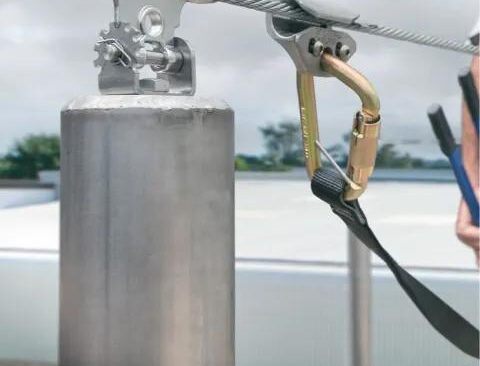
A horizontal lifeline system consists of a flexible or rigid line connected between anchor points, allowing workers to attach and move along the system while remaining protected.
Typical components include:
- End anchor points
- Intermediate supports (if required)
- Steel cable or rigid rail
- Energy absorbers
- Connection hardware
When Are Horizontal Lifeline Systems Used?
- Large rooftop areas requiring access
- Maintenance routes along building edges
- Industrial platforms and elevated work areas
- Situations where multiple anchor points are required
HLL systems are ideal when workers need mobility without disconnecting from fall protection.
Are Horizontal Lifelines Required in Ontario?
Horizontal lifelines are not always mandatory, but they are often required where single anchors or restraint systems cannot provide adequate protection.
Compliance is governed by:
- Ontario Regulation 851
- Ontario Building Code (OBC)
- CSA Z259 Fall Protection Standards
Engineering Requirements for Horizontal Lifelines
Horizontal lifeline systems must be engineered.
This is critical because:
- Loads increase significantly across spans
- Anchor forces are amplified under fall conditions
- System performance depends on layout and configuration
Improperly designed systems can fail or transfer excessive loads to the structure.
Key Design Considerations
- Span length between anchors
- Number of users
- Fall arrest vs travel restraint configuration
- Anchor capacity and structural support
- System deflection under load
These factors must be calculated and verified by a Professional Engineer.
Fall Arrest vs Travel Restraint Applications
Horizontal lifelines can be designed for either:
- Fall arrest systems
- Travel restraint systems
Whenever possible, systems are designed for restraint to eliminate fall risk.
See:
Fall Arrest vs Travel Restraint Ontario
Relationship to Roof Anchor Systems
Horizontal lifelines rely on properly designed anchors to support loads.
See:
Roof Anchor Inspections Ontario
Common HLL System Deficiencies
- Non-engineered installations
- Improper anchor spacing
- Missing energy absorbers
- Inadequate structural support
- Incorrect system configuration
These issues can result in unsafe conditions and system failure.
Horizontal Lifeline Design and Engineering Services
HITE Engineering provides:
- Horizontal lifeline system design
- Anchor layout and specification
- Engineering calculations and certification
- System inspection and upgrades
When Should You Install a Horizontal Lifeline?
- When workers require continuous movement at height
- When multiple anchor points are needed
- When fall protection coverage is insufficient
- When upgrading rooftop safety systems
Book a Horizontal Lifeline Assessment
Contact HITE Engineering
to design or assess your horizontal lifeline system.
FAQ: Horizontal Lifeline Systems Ontario
Do horizontal lifeline systems require engineering in Ontario?
Yes. Horizontal lifelines must be designed by a Professional Engineer due to the complex forces involved.
What standards apply to horizontal lifelines?
CSA Z259 standards, Ontario Regulation 851, and the Ontario Building Code apply to system design and use.
Can horizontal lifelines be used for travel restraint?
Yes. Many systems are designed for travel restraint to eliminate fall risk entirely.
What is the biggest risk with horizontal lifelines?
Improper design can lead to excessive loads and potential system failure.
Can HITE Engineering design HLL systems?
Yes. We provide full design, certification, and inspection services across Ontario.